
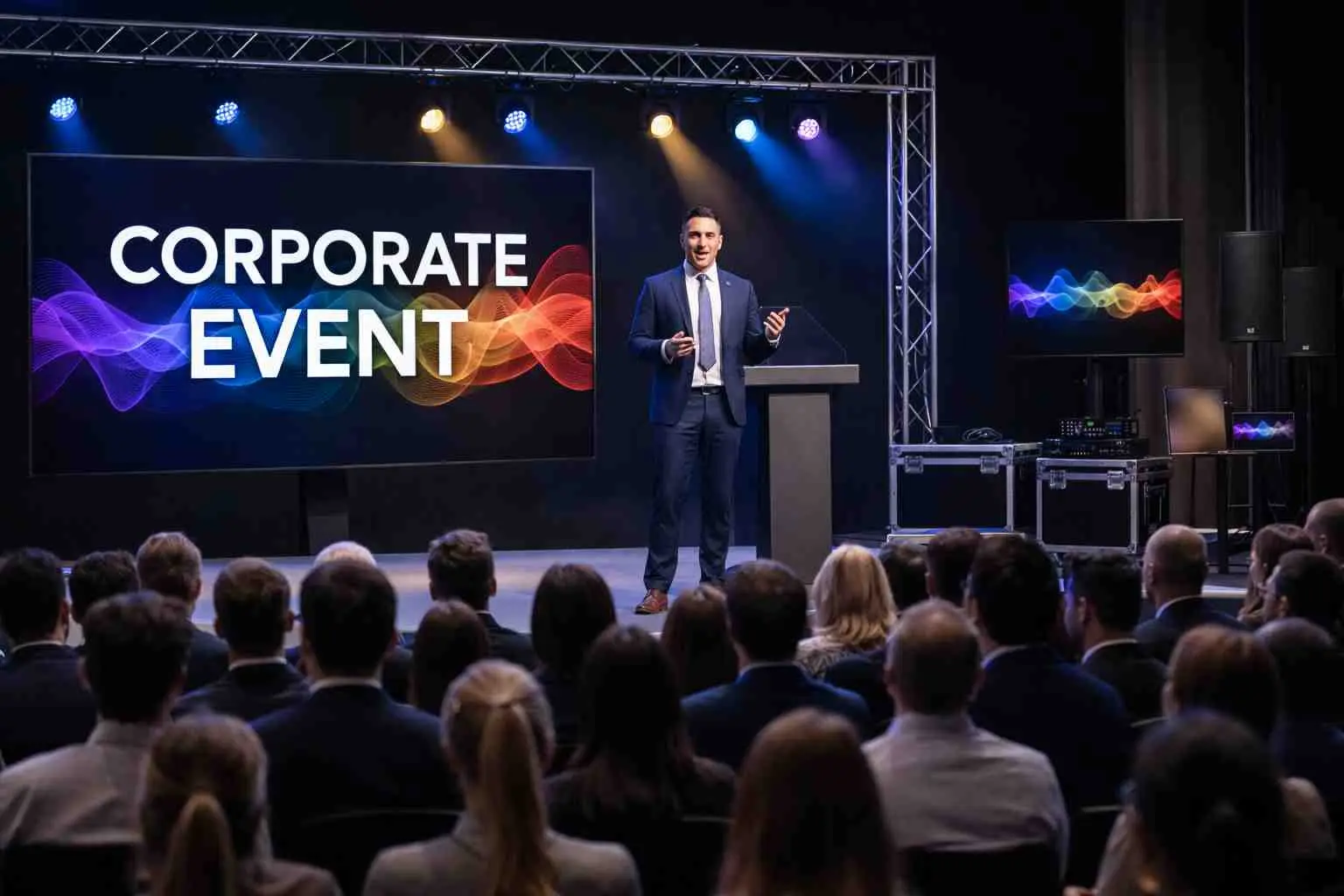
Lighting is the most underestimated part of event production. People spend months on the venue, the catering, and the programme. Then they look at the lighting quote and try to cut it.
The problem is that lighting is what makes the room feel like an event rather than a meeting. Two identical venues with identical table setups look completely different when one has professional lighting and one does not. It is not subtle. Anyone in the room can feel it even if they cannot articulate why.
This guide explains what types of event lighting you can hire in London, when you need each one, and what drives the cost.
The main types of event lighting
LED Uplighting
Colour-wash fixtures placed on the floor around the room perimeter. They wash the walls in colour and create ambient atmosphere. The most common addition to any event that wants to look like more than a hired room.
Stage Wash
Fixed or rigged lights pointed at the stage or speaking area. Separates the presenter from the background and makes the front of the room look polished. Essential for any event with a stage or podium.
Moving Heads
Intelligent fixtures that pan, tilt, and change colour on cue. Used for awards ceremonies, product launches, and evening receptions. Operated from a lighting desk by a technician.
Gobo Projectors
Project a logo, pattern, or text onto walls, floors, or backdrops. Used for brand events, weddings, and launches where a visual brand presence in the space matters.
Pin Spotting
Narrow beams focused on table centrepieces or specific objects. Common at awards dinners and weddings. Makes tables look considered rather than functional.
Haze Machines
Not lighting itself, but makes lighting effects visible. Without haze, beams of light from moving heads are not visible in the air. With it, the full effect shows. Some venues restrict their use.
What you actually need depends on the event
Corporate conference or seminar
A daytime conference in a well-lit venue usually needs stage wash lighting and not much else. The room lighting should be sufficient for the audience. A focused key light on the speaker and a simple backdrop behind the stage is a clean, professional look that does not distract from the content.
If the conference runs into the evening, or if the venue has poor natural or house lighting, uplighting around the room adds warmth and makes the space feel more considered.
Awards dinner
This is where lighting does the most work. An awards dinner needs ambient uplighting for dinner, stage wash for the ceremony, moving heads for the reveal moments, and ideally some floor or table pin spotting to make the dining area look premium.
The lighting also needs to change across the evening. Warm and relaxed during dinner. Focused and dramatic when the ceremony starts. Dynamic for award reveals. That requires a lighting desk and a technician operating it in real time. Pre-set fixed lighting does not give you this flexibility.
Product launch
Product launches need lighting that builds atmosphere and then delivers the reveal moment. Branded colour palette in the room during arrival. A tight spot or focused wash on the product display area. A programmed reveal sequence that fires on cue when the product is unveiled.
Gobo projectors are particularly effective at product launches for putting the brand logo or product name on the walls. It looks sharp and photographs well without requiring a large physical set piece.
Wedding
Uplighting matched to the wedding colour palette is the most popular addition. It transforms how a venue hall feels and shows up well in photographs. For the evening reception, moving head effects and a follow spot for the first dance are common additions.
Check with your venue before booking haze. Many London event spaces restrict it due to smoke alarm sensitivity. Your AV company should know this before they quote you for moving head effects that rely on haze to be visible.
Evening reception or party
The priority here is the dance floor and the energy of the space. Wash lighting that changes colour, moving heads, and effects like strobes at appropriate moments create the atmosphere people expect from a party environment.
This does not need to be complex. A small rig of four to six moving wash fixtures, a lighting desk, and a competent operator can make a room feel like a proper event. Over-ordering on lighting for a party is common and rarely necessary.
What affects the cost
Lighting hire costs vary based on a few straightforward factors.
Number of fixtures. More uplighters, more moving heads, more pin spots all add cost. The room size determines how many you actually need for decent coverage. A 20-metre ballroom needs more uplighters than a 10-metre function room.
Whether a technician is needed. Basic uplighting set to a fixed colour can be placed and left. Anything with a lighting desk, moving heads, or programmed cues needs a technician throughout the event. That is a labour cost on top of the equipment hire.
Rigging. Lighting hung from truss or rigging points above the room requires a setup crew and takes longer to install than floor-standing fixtures. Some venues have existing rigging infrastructure. Others need ground-support truss brought in, which adds cost.
Build and breakdown time. The longer the crew is on site, the higher the labour component of the quote. A venue that only allows access from midday for a 6pm event compresses the setup window and sometimes requires more crew to hit the deadline.
The question is not how much lighting you can afford. It is what lighting the room actually needs to feel right. More fixtures does not always mean better results.
Common mistakes
Assuming the venue lighting is enough. House lighting in most London event venues is designed to be functional, not atmospheric. It lights the room evenly, which is the opposite of what you want for an event. Do not assume it works until you have seen it in the context of your setup.
Ordering uplighting without checking the wall colour. Uplighting on dark walls or richly textured surfaces does not read the same way as on neutral or white walls. Your AV company should advise on this when they see the venue.
Forgetting about the stage. People spend money on ambient room lighting and then leave the stage looking flat. The stage is where all the attention goes. It needs dedicated lighting, not a share of the room wash.
Not confirming haze restrictions with the venue. Arriving on the day to find haze is not permitted is a problem if the lighting design relies on it. Confirm this in writing with the venue before you finalise the quote.
Our lighting hire page has more detail on the fixtures we supply. For professional standards on live event lighting, the PLASA website is the best reference point in the UK industry.
Common questions
Do I need a lighting technician or can I set it up myself?
For basic uplighting set to a fixed colour, you can often manage it yourself. For anything with a lighting desk, moving heads, or programmed cues, you need a technician. Operating intelligent lighting during a live event without training is not realistic.
Can lighting change colour during the event?
Yes. LED uplighters and intelligent fixtures can change colour on command or on a programmed schedule. Warm tones for dinner, something more dramatic for the entertainment. This needs to be set up and programmed in advance by a technician.
Does the venue’s existing lighting affect what I need to hire?
Yes, significantly. Some venues have good built-in rigs. Others have house lighting that works against what you are trying to create. A site visit before the event tells you what you are working with and what needs supplementing.
Need lighting hire for your event in London?
Tell us about the venue and the event. We will recommend what you actually need, not the maximum we can supply.